

Real estate in 2024 was nothing short of transformative. Development surged across the board, reshaping skylines and unveiling opportunities in every corner of the country. Yet, even as new projects broke ground and communities expanded, affordability remained a defining challenge. With rising costs, Americans turned to creative strategies — from downsizing to relocating to more affordable regions — reshaping housing trends nationwide.
Multifamily housing had a standout year as developers focused on meeting the skyrocketing demand for rentals, especially in cities where populations are growing fast. Renting became a go-to choice for many, driving a surge in apartment construction and reshaping neighborhoods across the country.
On the commercial side, industrial real estate kept dominating, thanks to the unstoppable rise of e-commerce. New warehouses and logistics hubs cropped up nationwide, especially in hotspots like the Sunbelt. And self storage stayed on the rise too, with new developments and creative adaptive reuse projects stepping up to meet growing demand.
Here’s a roundup of the key trends that shaped real estate in 2024, according to StorageCafe research studies:
Chasing housing affordability amid rising costs: Fixer-uppers may seal the deal (in certain areas)
Access to quality housing remained a pressing issue for Americans in 2024 as fierce competition and limited inventory defined the market. High interest rates and rising home prices left many potential buyers on the sidelines, prompting a shift toward alternative homeownership strategies. Among these, fixer-uppers emerged as a standout option for budget-conscious buyers looking for a way into the market.
Our research on U.S. cities with the greatest potential savings from buying a fixer-upper reveals that homes in need of repairs are, on average, 29% less expensive than move-in-ready properties nationwide.
But even fixer-uppers haven’t escaped skyrocketing prices, especially in popular hotspots where demand far outpaces supply. While the potential savings in California can be spectacular, affordability is still a challenge. In fact, a $1M budget in this state won’t guarantee a luxury home where you can take in the balmy weather and explore high-end boutiques. In cities like San Jose, you’ll need a hefty $1.5M, and in Los Angeles, around $1.05M, just to get your hands on a fixer-upper in need of serious TLC.
In stark contrast, midwestern cities offer fixer-upper opportunities at a fraction of the cost. Detroit, Cleveland and Milwaukee are standout examples where budget-conscious buyers can break into homeownership without the California-sized price tags. Cleveland, for instance, boasts fixer-uppers priced at an average of just $79,900 — a mere 8% of what a similar property would cost in Los Angeles.
Exurbs and suburbs overtake urban hubs as leaders in new home growth
Developers are ramping up construction efforts to meet the growing demand for housing, reflecting a dynamic blend of downtown resurgence and suburban expansion. Our study on the fastest-growing housing markets across the U.S., which analyzed housing inventory expansions in nearly 4,100 U.S. cities, shows that while downtown areas in some cities are reviving with new developments and amenities drawing residents back, it’s the suburbs and exurbs that are seeing the fastest growth.
Housing inventory in the exurbs — the outermost areas of metropolitan regions — has grown by 15% over the past decade, outpacing the 10% increase seen in principal cities. This expansion is driven by demand for more affordable, spacious and comfortable homes, highlighting the ongoing shift in housing preferences.
To understand what’s driving the decade-long construction boom and its impact on local markets, we also examined home appreciation, population changes, shifts in remote work patterns and the overall economic landscape. Among the key takeaways:
- Five of the top 10 places with the fastest-growing housing inventories over the past 10 years were exurbs.
- Communities in the South showed the most significant growth, with Texas featuring seven suburbs among the top 20 fastest-growing housing markets and Florida boasting five.
What’s fueling the exurb and suburban growth?
Quality of life is a primary factor driving suburban expansion, with families seeking larger homes, safer communities and better schools — even if it means paying a premium in some locations. The rise of remote work has also increased demand for housing in suburban and rural areas, as people seek a better work-life balance away from congested urban centers.
Suburban growth’s impact on home prices
Suburban growth has applied upward pressure on house prices. Over the past decade, home values surged by 78% in exurbs and 57% in the suburbs. In Vineyard, UT, and Celina, TX — two of the top 10 housing hotspots — prices more than doubled. Florida’s Davenport, where the remote work scene is thriving with a 715% growth in the number of people working from home over the same time frame, has also seen home prices spiraling. Home values jumped from $94K in 2013 to nearly $275K in 2022.
Self storage aligns with housing growth
Self storage often aligns with housing development and demographic shifts, allowing people to maximize living spaces in many of the decade’s boomtowns. In the U.S., 48% of large-scale self storage development is located in the suburbs.
Housing trends: Big gains for apartments, single-family homes slow down, and the ‘missing middle’ adds to the affordability problem
While the housing market is growing by all accounts, it’s still falling far short of demand, which continues to push prices upward. In fact, according to our research on housing inventory evolution, 99.4% of cities experienced home price increases over the past two decades.
The multifamily market is on an upswing, with rental housing flying off the shelves as quickly as it’s being built. Meanwhile, middle housing and single family homes remain on the back burner, held back by rising construction costs and tight land markets.
Middle housing — options like duplexes, triplexes and townhomes — grew by just 11% nationwide over the same period, despite its potential to address affordability challenges and offer more diverse housing choices. Migration hotspots like Arizona and Texas are particularly feeling the affordability strain. Cities like Gilbert, AZ, and Fort Worth, TX, where middle housing makes up less than 25% of the housing inventory, are seeing demand far outpace supply. This shortage of mid-range options has fueled dramatic price increases. In Fort Worth, for example, home prices have skyrocketed by 218% over the past two decades, underscoring the growing affordability crisis in high-growth regions.
Trying to fill in the gaps, the multifamily sector is stepping up to partially address the demand, increasing by 54% nationwide over the same period. Urban hotspots like Charlotte and Raleigh, NC, Houston, TX, Atlanta, GA, and Denver, CO, have fully embraced the rental living trend, leading the way in multifamily expansion by more than doubling their inventories.
Commercial real estate sectors booming alongside housing
Domestic migration is reshaping housing markets while also driving demand for commercial real estate, which benefits from growing populations and increased economic activity in high-growth areas. The industrial and self storage sectors are surging, driven by evolving consumer behavior, economic shifts and changing lifestyle needs.
On the industrial front, the rise of e-commerce has created an unprecedented demand for logistics and distribution centers, fueling a boom in warehouse construction. The self storage sector has also seen explosive growth, spurred by rising housing costs, downsizing trends and increased mobility. In 2023, new self storage supply was 153% higher than in 1980, while industrial construction output rose by 39% over the same period.
Beyond new builds, adaptive reuse is emerging as a creative and sustainable way to expand self storage inventories. Developers are converting underutilized or abandoned buildings, particularly in urban areas with surplus historic industrial stock, into functional self storage facilities. These conversions are not only cost-efficient and environmentally friendly but also help preserve local architectural character. They address the growing demand for storage in densely populated areas, offering convenient solutions for residents and businesses managing limited space.
Domestic migration in the U.S. fueled by affordability and the desire for a slower-paced lifestyle
Our report in state-to-state migration in the U.S. shows that moving continues to be driven by housing affordability, as Americans increasingly seek opportunities to stretch their budgets. High housing costs in states like California and New York are prompting residents to relocate to more affordable states such as Texas, Florida and Arizona. In these states, the cost of living and housing prices are significantly lower, enabling many movers to transition from renting to homeownership or upgrade to larger, more comfortable homes. This financial relief is particularly appealing in an era of rising mortgage rates and limited housing inventory.
Generational preferences also shape moving trends. Gen Z is drawn to states offering affordable housing, strong career prospects and a laid-back, outdoorsy lifestyle. Meanwhile, millennials are favoring larger states like Texas, Georgia and Florida, which combine strong job growth, no state income tax and relatively affordable housing markets.
2024 real estate: Adapting to a new normal and navigating affordability challenges
2024 was a year of adaptation as the real estate market transitioned into a “new normal” post-health crisis, with most sectors returning to prepandemic trends — except for office and retail, which continued to navigate structural shifts and evolving consumer behaviors.
Multifamily housing experienced a major upswing, fueled by surging rental demand, while single family and middle housing fell behind, constrained by high costs and limited land availability. Suburbs and exurbs emerged as leaders in new home growth, driven by affordability and a focus on quality of life.
On the commercial side, industrial and self storage sectors thrived, powered by e-commerce growth, increased mobility and innovative adaptive reuse projects that repurposed underutilized spaces.
However, despite these gains, housing supply remains far below demand, keeping prices high and highlighting the urgent need for creative solutions to tackle the ongoing affordability crisis.



Where to Donate Furniture in NYC (With Free Pick-Up Options)
Finding somewhere to donate furniture in NYC is more complicated than it should be. Not every organization accepts large items, pick-up availability is inconsistent, and the options that do exist aren’t always easy to find in one place. If you’re specifically hoping to donate furniture with free pick-up, the list of options gets even shorter.

Clean Out, Give Back: Where to Donate Clothes in Los Angeles
Few cities reinvent themselves like Los Angeles, and wardrobes tend to follow suit. Between changing seasons, evolving trends and an endless calendar of occasions worth dressing for, closets fill up fast, making the question of where to donate clothes in Los Angeles one that most Angelenos eventually find themselves asking.

How to Store Shoes Based on Your Personality
Your shoe closet is lying — not about how many pairs you own (that number is likely higher than you’d admit), but about who you are. The way you approach shoe storage, or avoid it, is one of the more honest reflections of your personality that exists in a home.
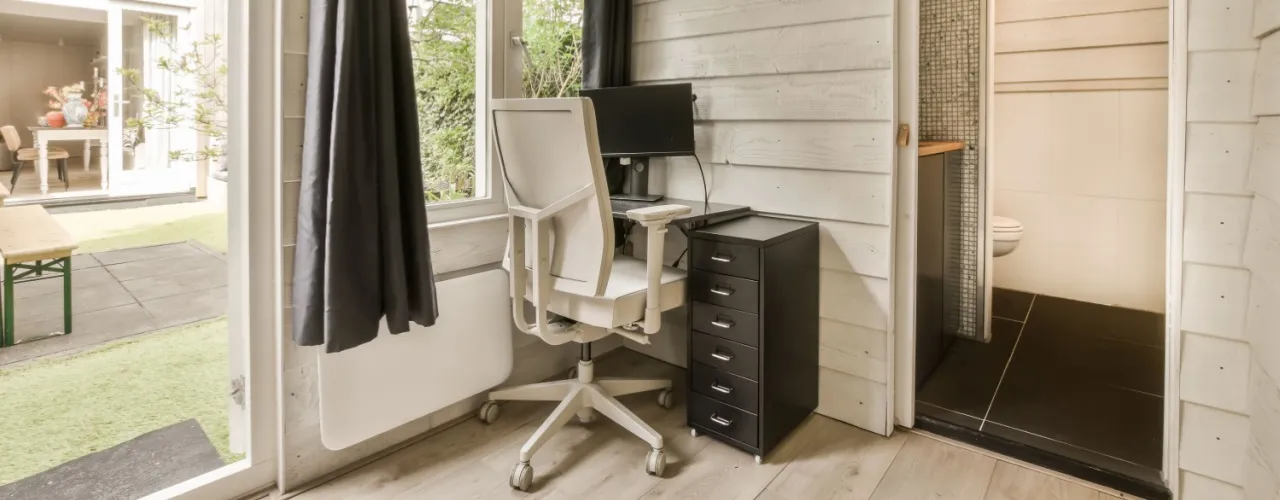
Tiny Home Storage Ideas for Every Nook and Cranny
Tiny home storage is one of those challenges that sounds straightforward until you’re standing in 200 square feet wondering where the winter coats are supposed to go. You didn’t downsize for the storage anxiety — you did it for the coziest place you’ve ever called home, a wallet that finally feels lighter, and a minimalist lifestyle that suits you just fine.

Best States for Electric Vehicles (2026): The West Leads EV Adoption, Oklahoma Speeds Up
Last updated: June 22, 2026.

Self Storage Discounts: Types, Tips and How to Get the Best Deals for Your Needs
When you start looking for a self storage unit to rent, one thing becomes clear very quickly: self storage discounts are a standard part of the industry. From introductory specials to military savings and online-only rates, operators frequently offer promotions designed to make renting a unit more affordable and flexible.

How Self Storage Can Help Event Planners
When you attend a great event, you rarely think about the choreography happening behind the curtain or after the last guest leaves. Unless, of course, you’re an event planner — an industry that has grown 8.6% per year on average over the five years between 2020 and 2025. It shows no signs of slowing down either, as small businesses and event planners continue to carve out their place across America.

Most Fun Cities In The U.S.: Miami & Orlando Rule The Fun Access Map, While Phoenix Reveals A Growing Leisure Divide
Are Americans going out less, or just living in places that make going out harder?

Interstate Moves Hit 10-Year Low As Affordability Bites: Which States Are Still Gaining Residents?
America’s pandemic-era relocation boom is officially cooling. Interstate migration fell to its lowest level in a decade in 2024, with just 7.15 million Americans moving across state lines — more than 1 million fewer than at the 2022 peak. That’s roughly a 13% drop in just two years.